Designing Dignity
On designing public experiences that sustain identity, memory, and belonging beyond spectacle.
FIELD ESSAYSLYRIC ESSAYSTHOUGHT GALLERYFIELD CASE
Contemplations | Marie Fe Isla Rae
3 min read

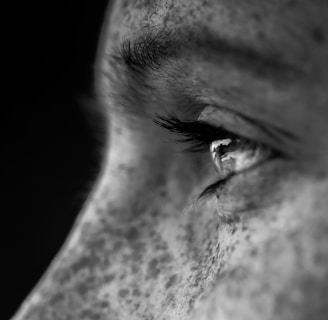
Designing Dignity
Not every public moment is equal.
Some are loud, immediate, and quickly forgotten—
constructed for attention, measured in visibility,
and designed to disappear as soon as the next event arrives.
Others move differently.
They gather meaning slowly.
They hold memory rather than spectacle.
They leave behind not only images,
but a subtle shift in how people understand themselves
in relation to one another.
These are the moments where dignity becomes visible.
::::::::::::::::::::::::::::::::::::::::
Dignity is rarely announced directly. It is not a slogan, nor a theme that can be applied through branding or ceremony alone.
Instead, it is felt in the quality of attention a moment receives:
whether people are represented as symbols or as authors
whether culture is displayed or allowed to speak
whether visibility extracts meaning or restores it
Because visibility, on its own, proves very little.
To be seen is not the same as being recognized.
To be celebrated is not the same as being understood.
To be included is not always to belong.
Dignity lives in these distinctions.
::::::::::::::::::::::::::::::::::::::::
Public cultural moments carry particular weight in this regard.
Festivals, ceremonies, exhibitions, and civic gatherings often appear temporary—brief interruptions in the ordinary flow of institutional life.
Yet they function as thresholds.
They reveal which stories are permitted to stand in the light,
whose histories are treated as foundational rather than decorative,
and whether presence is granted conditionally or affirmed as inherent.
What unfolds in these moments
quietly shapes what a community believes is possible afterward.
::::::::::::::::::::::::::::::::::::::::
There is a long history of culture being used instrumentally.
As soft power.
As tourism strategy.
As proof of progress or diversity.
These uses are not always cynical.
They may bring resources, visibility, and opportunity.
But when culture is asked only to perform value for others,
something essential is diminished.
Expression becomes translation.
Identity becomes presentation.
Meaning bends toward expectation.
And dignity, though still spoken of,
becomes harder to feel.
::::::::::::::::::::::::::::::::::::::::
Designing dignity requires a different posture.
Less extraction.
More listening.
Less emphasis on spectacle.
More attention to continuity.
It asks not only What will be shown?
but
Who is shaping the frame?
Who remains after the audience leaves?
What structures endure when the lights are gone?
These questions shift the work from presentation toward authorship.
From moment
to future.
::::::::::::::::::::::::::::::::::::::::
In this sense, cultural events are rarely the beginning of meaning.
They are accelerants.
They intensify conditions already present—
confidence or uncertainty,
belonging or performance,
memory or erasure.
When dignity is already being cultivated beneath the surface, a public moment can reveal it with extraordinary clarity.
When it is not, no amount of production can fully substitute for what is missing. The difference is felt immediately, even when it cannot be easily explained.
::::::::::::::::::::::::::::::::::::::::
I have come to think of dignity as a form of coherence between visibility and truth.
A condition where what is seen publicly
does not distort what is lived privately.
Where representation does not require simplification.
Where recognition does not depend on approval.
Where presence is not negotiated but assumed.
Design, in these moments, becomes quieter.
Not absent—but careful.
It creates space rather than filling it.
It supports voice rather than directing attention toward itself.
It allows meaning to emerge without forcing it into spectacle.
This is a different kind of authorship:
One measured less by applause than by what remains afterward.
::::::::::::::::::::::::::::::::::::::::
The most powerful cultural moments are often those that feel almost ordinary while they are happening.
People gather.
Stories are shared.
Histories surface.
Something long carried privately becomes visible without needing to justify its presence.
Nothing about this appears dramatic.
Yet when the moment passes, the atmosphere has changed.
A community recognizes itself more clearly.
A history stands with greater steadiness.
A future feels slightly more imaginable.
This is dignity at work—quiet, cumulative, and difficult to reverse.
::::::::::::::::::::::::::::::::::::::::
Not every institution knows how to hold such moments. Some move too quickly toward spectacle. Others hesitate to grant full authorship to the voices they claim to honour.
But when dignity is taken seriously—not as image, but as condition—public space begins to behave differently. It becomes less a stage and more a meeting ground.
Less a performance
and more a declaration of presence.
And meaning, instead of being displayed,
is allowed to continue.
::::::::::::::::::::::::::::::::::::::::
Designing dignity, then, is not about creating beauty alone. It is about creating conditions where recognition can occur without distortion.
Where visibility strengthens identity
rather than reshaping it for comfort.
Where what is brought into the light
can remain whole.
This work is subtle.
It rarely announces itself.
It resists easy measurement.
Yet over time, it determines whether public culture feels ornamental—or foundational.
::::::::::::::::::::::::::::::::::::::::
Contemplations | A lyric essay by
Marie Fe Isla Rae
Marie Fe del Rosario
Principal, Creative Strategy & Experience
Designing experiential moments where the future becomes tangible.
PRACTICES
At Threshold: Where the future becomes tangible
ÉLAN by Turquoise & Blue — Embodied Creative Leadership
© 2026 Marie Fe del Rosario. All rights reserved.
Terms of Use · Privacy Policy · Permissions & Collaborations
All content on this site—including text, frameworks, methodologies, visuals, and strategic concepts—is protected by copyright and may not be reproduced, adapted, or used without prior written permission.
Authorship and web design by Marie Fe.
Enter the Threshold Files
Field notes on consequential moments, creative strategy, experience, narrative, design—and the work of making possible futures tangible.
For people interested in what happens between imagining and making.