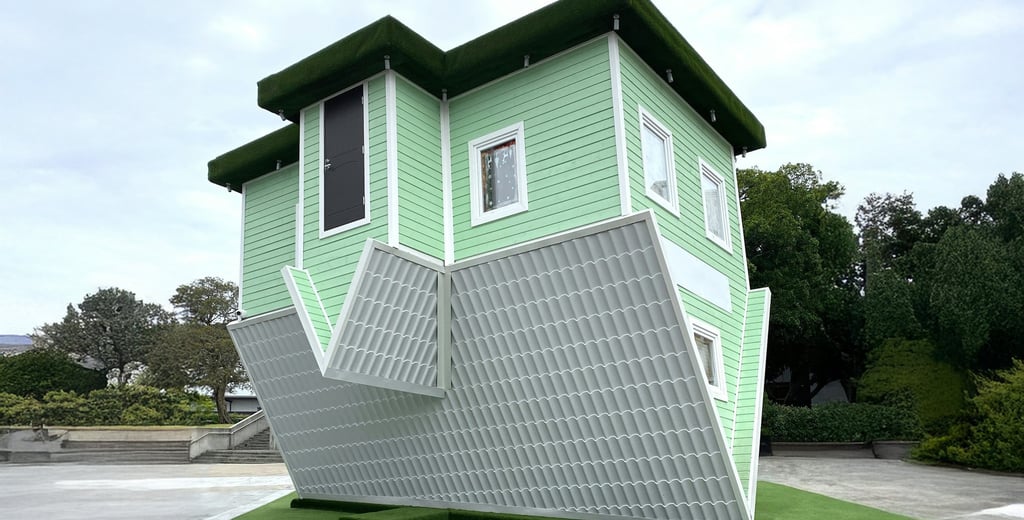
Design Follows Decisions
A reflection on the quiet relationship between decision and form — and why design can only carry the coherence that institutions are willing to choose.
FLAGSHIP ESSAYSLYRIC ESSAYSTHOUGHT GALLERY
Contemplations | Marie Fe Isla Rae
3 min read
Design Follows Decisions
I began my career in design.
Like many designers, I was drawn to the clarity of making—
the transformation of ideas into form,
the moment when something intangible becomes visible, shareable, real.
Design offered a language for meaning that did not depend on argument.
A way to shape experience directly.
A sense that careful attention could bring coherence to complexity.
For a long time, this felt like the centre of the work.
And in many ways, it was.
::::::::::::::::::::::::::::::::::::::::
Over time, however, a quieter pattern began to appear. Projects that felt most resolved were rarely distinguished by aesthetics alone.
Their strength seemed to originate earlier—in decisions made before any visual system, environment, or message existed.
Where direction was clear, design unfolded with unusual ease.
Forms aligned naturally.
Language felt proportionate.
Experiences carried a sense of inevitability rather than effort.
Where direction was uncertain, the opposite occurred.
No amount of craft could fully stabilize what had not yet been decided.
Iterations multiplied.
Conversations circled.
Beauty, when achieved, felt fragile—
as though it were compensating for something still unresolved beneath the surface.
::::::::::::::::::::::::::::::::::::::::
This realization did not diminish design.
It clarified its role.
Design was never merely decoration,
nor simply communication.
It was a form of translation—
the visible expression of choices already made,
or the silent exposure of choices still avoided.
In this sense, design functioned as a diagnostic tool.
It revealed whether an institution understood what it was trying to say,
whether its ambitions were internally aligned,
whether its future had been chosen or only hoped for.
The work on the surface was always telling the truth about the work beneath it.
::::::::::::::::::::::::::::::::::::::::
There is a temptation, especially in complex environments,
to ask design to resolve uncertainty.
To make direction feel clearer than it is.
To create unity where alignment has not yet formed.
To signal confidence before conviction has fully arrived.
Design can do this—briefly.
But over time, form cannot carry more coherence than decision allows.
The strain becomes visible.
Audiences sense the dissonance.
Teams feel the gap between appearance and reality.
What was meant to reassure begins instead to reveal.
::::::::::::::::::::::::::::::::::::::::
It was through encountering this limit
that my relationship to design began to change.
Not away from making,
but upstream of it.
Toward the space where decisions shape what design will later be asked to hold.
This movement was gradual. Almost imperceptible at first. Less a departure than a widening of attention.
I found myself drawn to earlier conversations—
moments before briefs existed,
before language settled,
before direction hardened into expectation.
Because it was here that coherence was either formed—or quietly lost.
::::::::::::::::::::::::::::::::::::::::
Working in this upstream space does not replace design.
It protects it.
When decisions are faced with honesty,
design regains its natural clarity.
It no longer needs to persuade on behalf of uncertainty
or compensate for misalignment.
Instead, it can do what it does best:
give form to meaning,
create environments where intention is felt,
make visible the future an institution has consciously chosen.
In this state, design feels less like effort
and more like recognition.
::::::::::::::::::::::::::::::::::::::::
The phrase design follows decisions
is sometimes heard as a hierarchy—
strategy first, form second.
But this is not quite accurate.
The relationship is more reciprocal than that.
Design sharpens thinking.
Material reality tests abstraction.
Experience reveals consequences that theory cannot predict.
Yet even within this reciprocity, sequence matters. Because when design is asked to lead before direction is clear, it is placed in an impossible position—expected to discover meaning that only decision can provide.
::::::::::::::::::::::::::::::::::::::::
What changed for me, ultimately,
was not a belief in strategy over design.
It was a deeper respect for both.
For decision as the act that makes integrity possible.
For design as the act that makes integrity visible.
Seen this way, the movement from designer to strategist is not a departure from making. It is a return to the conditions that allow making to matter.
::::::::::::::::::::::::::::::::::::::::
I still believe in the power of form.
In the quiet authority of proportion,
the emotional intelligence of space,
the way light, language, and rhythm
can shape what people feel before they know why.
But I have come to believe something else as well:
that the most beautiful work
is rarely the result of design alone.
It is the result of clarity arriving early enough that design is free to tell the truth.
::::::::::::::::::::::::::::::::::::::::
Contemplations | A lyric essay by
Marie Fe Isla Rae
Marie Fe del Rosario
Principal, Creative Strategy & Experience
Designing experiential moments where the future becomes tangible.
PRACTICES
At Threshold: Where the future becomes tangible
ÉLAN by Turquoise & Blue — Embodied Creative Leadership
© 2026 Marie Fe del Rosario. All rights reserved.
Terms of Use · Privacy Policy · Permissions & Collaborations
All content on this site—including text, frameworks, methodologies, visuals, and strategic concepts—is protected by copyright and may not be reproduced, adapted, or used without prior written permission.
Authorship and web design by Marie Fe.
Enter the Threshold Files
Field notes on consequential moments, creative strategy, experience, narrative, design—and the work of making possible futures tangible.
For people interested in what happens between imagining and making.